
Feb
If you watched the Super Bowl this past Sunday, you probably noticed the passes, the tackles, and maybe even the halftime show. But did you notice the lawn?
Of course you didn’t. And that’s exactly the point.
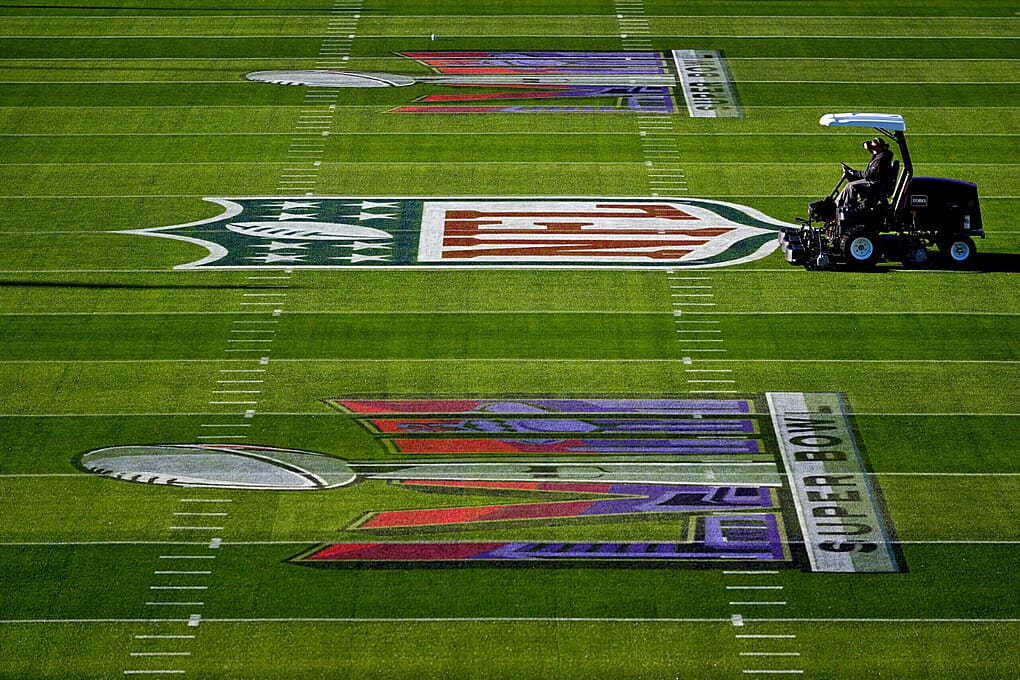
The turf at Levi’s Stadium in Santa Clara looked flawless. Not a brown spot, not a puddle, not a single blade out of place. It handled 300-pound linemen churning up the field for three hours without turning into a mud pit. That kind of perfection doesn’t happen by accident. It’s the result of precision irrigation, careful water management, and technology that most landscape contractors would recognize immediately.
Here’s the thing: the same principles that keep a Super Bowl field camera-ready can transform how we think about everyday irrigation. Whether you’re managing a commercial property or a residential landscape, there’s a lot to learn from the people who water the most scrutinized grass in America.
A Field Grown 110 Miles Away
That perfect playing surface didn’t start at Levi’s Stadium. It started 18 months earlier on a sod farm in Livingston, California, a Central Valley town 110 miles east of Santa Clara.
West Coast Turf grew 80,000 square feet of custom Tifway II hybrid Bermuda grass overseeded with perennial ryegrass specifically for this game. NFL Field Director Nick Pappas selected it after months of farm visits, cutting samples, and testing surfaces for quality.
Why Livingston? The soil. Central Valley’s rich, loamy earth. A product of runoff from the last ice age. It creates ideal conditions for championship turf. In early January, 570 rolls of sod, each weighing about a ton, were loaded onto 32 trucks and driven to Santa Clara.
The old field was ripped out, and the new surface installed in two days. Then came a month of intensive care: aerating, fertilizing, watering under pink LED grow lights, and constant testing.
The Central Valley connection highlights what irrigation professionals already know: great turf doesn’t happen by accident. It’s precise water management, careful planning, and understanding exactly what the grass needs.
The Invisible Art of Stadium Irrigation
NFL groundskeepers operate on a different level. They’re engineering playing surfaces that drain fast, stay firm underfoot, and look pristine under 4K cameras. Miss the mark by even a little, and you’ve got players slipping and millions of viewers seeing every imperfection.
The secret? Data-driven irrigation that would make most commercial systems look primitive.
Modern stadium turf management relies on soil moisture sensors buried at multiple depths, weather station integration, and controllers that adjust watering schedules in real time based on evapotranspiration rates. They’re not guessing when to water. They know — down to the fraction of an inch — exactly how much moisture is in the soil at any given moment.
Sound familiar? It should. This is the same smart irrigation technology that contractors have been installing in commercial landscapes for years. The difference is that stadium crews treat every watering decision like it matters, because in their world, it does.
Precision Over Guesswork
Most irrigation systems are set it and forget it. A timer clicks on at 3 a.m. every Tuesday and Thursday, regardless of whether it rained or the forecast calls for showers. The result? Overwatering, runoff, and climbing water bills.
Stadium groundskeepers can’t afford that. Every gallon counts, not just for budget but because overwatering before game day can turn a field into a skating rink. They use weather-based controllers that pull real-time data and adjust automatically. If rain’s forecast, the system doesn’t water. If temperatures spike, it compensates.
The technology exists for commercial and residential properties too. Smart controllers integrate with weather stations, soil sensors, and satellite data to optimize schedules. The challenge isn’t the technology — it’s getting property owners to see irrigation as worth investing in rather than just another line item.
Why Most Lawns Aren’t Super Bowl-Ready
Walk through any commercial property, and you’ll see overwatered turf with fungal patches, dry spots where coverage missed, runoff pooling on sidewalks. Most irrigation systems are stuck in the 1990s.
Traditional controllers are dumb. They do what you tell them and nothing more. Set to water 15 minutes per zone three times a week in April? Still doing it in October, even though fall temperatures make that wasteful.
Stadium crews monitor soil moisture constantly and adjust on the fly. That responsiveness isn’t overkill — it’s smart management, and exactly what smart irrigation controllers do.
Lessons from the Fifty-Yard Line
What can irrigation contractors and property managers take away from Super Bowl-level turf care?
First, treat water like the limited resource it is. Stadium groundskeepers understand that every gallon has a cost — financial and environmental. That mindset should apply to every landscape.
Second, invest in the right technology. Soil moisture sensors, weather-based controllers, and real-time monitoring aren’t just for stadiums. They’re available, affordable, and proven to reduce water waste by 30% or more. The ROI shows in lower bills, healthier turf, and properties that actually look maintained.
Third, stop guessing. If you’re setting irrigation schedules based on gut feel or what worked last year, you’re behind. Data-driven irrigation isn’t complicated. It’s just better.
The Bottom Line
The next time you watch a game, take a closer look at the field. Notice how the grass looks healthy but not soggy, green but not overgrown, firm but not hard. That’s precision irrigation.
Now imagine applying that same care to the properties you manage. Not because millions are watching, but because water is too valuable to waste and landscapes are too expensive to let fail.
Stadium groundskeepers have figured this out. The rest of us are catching up. The technology is here. The methods are proven. All that’s missing is the willingness to treat every lawn like it’s headed to the Super Bowl.
Because when it comes to water, every yard should be game day ready.