
Nov
For irrigation contractors and agricultural producers, water is not an abstract political topic. It is the operating system of your business. Every field, every landscape, every pivot, every valve, every crop depends on it. This week, that operating system became even more strained. The seven states that rely on the Colorado River failed to reach an agreement on reducing water use, missing a key deadline and increasing uncertainty for everyone who works with water in the American West.
This moment isn’t just about policy. It affects how much water your customers receive, how much growers can irrigate, how cities structure budgets, and how contractors design and maintain irrigation systems. With reservoir levels near record lows and long-term supply continuing to decline, the Colorado River situation is becoming one of the defining issues for the irrigation and agricultural industries.
Why This Matters to Contractors and Growers
The Colorado River supplies drinking water to 40 million people and irrigates 5.5 million acres of farmland. If you install, repair, design, or manage irrigation systems, the outcome of these negotiations determines demand for your services, the urgency of your customers, and the water budgets they’ll be forced to follow.
River flows have dropped nearly 20 percent over the last 25 years. Scientists say the first two decades of the 2000s were the driest period in the West since at least the year 800. Temperatures are higher, snowpack melts earlier, and the two major reservoirs that keep the system functioning, Lake Mead and Lake Powell, are both less than one-third full.
Even record-setting snowfall in early 2023 provided only a momentary bump. Irrigators know the truth: a wet season doesn’t solve a structural deficit. The long-term supply trend continues downward.
The Core Issue: Who Reduces Water First?
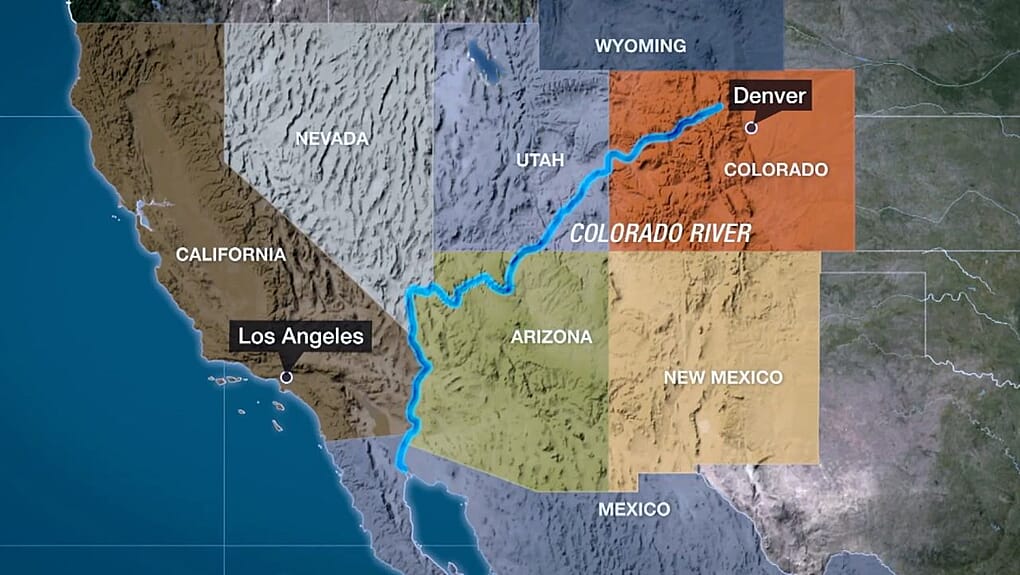
The river basin is divided into two regions. The Upper Basin includes Colorado, Utah, Wyoming, and New Mexico. The Lower Basin includes California, Arizona, and Nevada. Under the Colorado River Compact of 1922, both basins were given equal shares of water, based on hydrology that no longer exists.
The Lower Basin states have already taken temporary cuts in previous agreements. The Upper Basin states argue that their usage is naturally limited by snowfall and runoff, and therefore should not be required to reduce further. This disagreement is the primary reason the states reached a stalemate.
For people who work with water—contractors, growers, consultants, operators—the conclusion is straightforward. Water reductions are coming. They may be voluntary at first, then mandatory. The timing may shift, but the direction is certain. Efficiency is about to become even more essential to staying profitable.
What Happens If the States Cannot Agree?
If the states fail to find common ground, responsibility shifts to the federal government. The Trump administration, through the Bureau of Reclamation, would have to determine who receives less water and how much they lose. Any federally imposed plan would likely trigger legal challenges. The last major legal battle over the Colorado River, the long-running Arizona v. California dispute, lasted seventy years.
Legal uncertainty does nothing to slow the demand for irrigation, food production, or landscape water management. While politicians argue, contractors and growers still have to deliver results under tighter conditions, changing allocations, and unpredictable supplies.
Agriculture Will Face the Most Pressure
Public conversations often focus on lawns, golf courses, or urban landscaping. But the data makes the situation clear. More than half of Colorado River water is used to grow livestock feed. Another quarter goes to crops like cotton, wheat, corn grain, and barley. Residential use accounts for 12 percent, while commercial and industrial use accounts for 4 percent.
Agriculture is the largest user of river water, which means policymakers will eventually look to agriculture for the largest cuts. That reality will push growers to adopt technologies and practices that allow them to maintain yields with less water. Soil moisture monitoring, pivot automation, variable-rate irrigation, microirrigation, drought-efficient crop choices, scheduling based on ET and real-time data, and precision tools will become central to profitability.
Growers who embrace modernization will stay competitive. Those who resist change risk losing margin and, eventually, viability.
How This Will Affect Irrigation Contractors
Contractors who serve HOAs, municipalities, school districts, parks, commercial campuses, and other large landscapes will see rising pressure for visible, measurable, and dependable water savings. Customers will need professionals who can design systems that perform under lower water budgets, upgrade older systems for efficiency, and use technology to reduce waste.
They will look for experts who can explain ET-based scheduling, select the right nozzles and valves, install smart controllers with strong analytics, use sensors and pressure regulation effectively, and diagnose water loss. Contractors who lead with knowledge and innovation will become the preferred partners. Those who wait for customers to panic will find themselves behind.
Drought Conditions and the Winter Outlook
According to the U.S. Drought Monitor, 92 percent of the Colorado River Basin remains in drought. A developing La Niña pattern points toward a drier-than-average winter—precisely when the basin needs a strong snowpack to stabilize reservoir levels.
For irrigation-dependent industries, this likely means reduced allocations, tighter restrictions, and more scrutiny in the next two years. Preparing before the cuts arrive is significantly easier than adjusting afterward.
What Contractors and Producers Should Do Right Now
The immediate priorities are clear. Conduct system audits now. Repair leaks, resolve pressure problems, and fix distribution uniformity issues. These are the least expensive ways to save water.
Upgrade scheduling and management tools. Smart controllers, weather-based adjustments, soil moisture sensors, and automated pivot control systems improve efficiency and protect yield or landscape performance.
Modernize hardware where possible. High-efficiency nozzles, pressure-regulated heads, flow sensors, microirrigation systems, durable repair solutions, and optimized layouts provide long-term value under tighter budgets.
Educate your customers. Share what is happening with the river, why it matters, and how proactive improvements protect their investments.
And be prepared for regulatory-driven opportunities. When cities or ag districts face mandatory cuts, the irrigation industry becomes the solution. Those positioned early will capture the work.