
Dec
If it feels like your water bill is creeping up month after month, you’re not imagining things. Homeowners across the country are opening their statements, doing a double take, and asking the same question: “How am I using this much water?” The truth is you might not be. In many cases, rising bills have less to do with your behavior and more to do with the forces shaping America’s water future. But that doesn’t mean you’re powerless, far from it. With a few smart moves, you can quickly take control of your water use and lower your bill faster than you think.
Let’s break this down in a clear, practical way, so you understand why water bills are rising and what you can do today to bring them back down.
1. Water rates are increasing nationwide, here’s why
Across the country, water agencies are quietly raising rates. It’s not because they’re trying to punish homeowners or sneak extra fees into your mailbox. It’s because the cost of delivering clean, reliable water is skyrocketing.
Aging infrastructure is the biggest culprit. Much of the U.S. water system was built decades ago. Some of it before your grandparents were born. Pipes corrode. Treatment plants need modernization. Pump stations need upgrades. Utilities don’t get federal bailouts when something breaks; they get bills. And those costs get passed along to customers.
Then there’s inflation. Chemicals used in water treatment? Up. Labor? Up. Power to run pumps? Definitely up. Even if you didn’t change a thing in your home or yard, your rates likely increased because the cost of delivering water rose.
So no, it’s not all in your head. Utilities aren’t charging more simply because they can. They’re charging more because the entire system is becoming more expensive to maintain.
2. Outdoor water use is the silent budget-killer
If you’re looking for the main reason behind high water bills, it’s often outside your home. Recognizing that outdoor water use impacts your costs can make you feel more capable of making simple changes to save money.
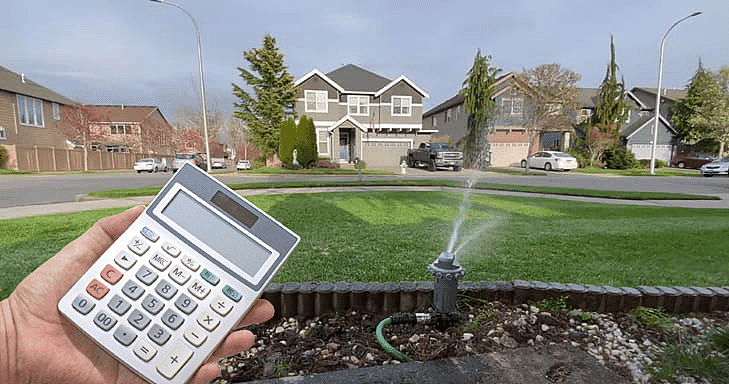
Lawns, gardens, landscapes, drip systems, and especially aging sprinkler setups can quietly drive your bill through the roof without warning. Many homeowners don’t realize:
- A single broken sprinkler head can waste hundreds of gallons per day.
- A small underground leak can drain thousands of gallons per month.
- Overwatering by “just a few minutes” on each zone can spike your bill by 20–30%.
- Irrigation schedules rarely match actual weather conditions.
You may not see the waste. You don’t hear it. You don’t feel it. But your bill does.
The biggest surprise? Most irrigation systems run early in the morning when you’re asleep. So that broken head that looks “mostly fine during the day” becomes a geyser at 4:30 a.m.
3. Weather swings affect more than you realize
If you’ve noticed bills climbing during certain seasons or years, it may have nothing to do with your habits.
Hotter summers and longer dry periods mean landscapes demand more water to stay alive. When temperatures spike, even the most well-designed irrigation system can’t avoid increased usage.
If your controller hasn’t been updated in years (or ever), it’s running the same schedule regardless of temperature, rainfall, or season. And that means you’re wasting water without knowing it.
4.Leaks are more common than many realize,
Catching and fixing them can give you a real sense of achievement and control over your water costs. I’ve been in the water industry long enough to know one truth: Every home leaks at some point. Sometimes it’s obvious — like a dripping hose or a constantly running toilet. But the worst leaks are the hidden ones:
- Underground irrigation pipes
- Slow slab leaks
- Crawl-space plumbing failures
- Worn valves that never fully close
These tiny, barely noticeable issues can cost you hundreds of dollars before you ever see a drop.
Here’s a quick reality check:
If your bill suddenly doubled or tripled for no apparent reason, you almost certainly leak.
5. So… what can you do to lower your bill fast?
Here’s the good news: lowering your bill doesn’t take a contractor, a week’s worth of work, or a huge investment. It takes awareness, minor adjustments, and more innovative tools.
Step 1: Check for leaks today
Look at your water meter. If it’s spinning when nothing is running, you’ve got a leak. Inside leaks = call a plumber. Outside leaks = check your irrigation system.
Step 2: Audit your irrigation system
This is the most impactful step — and the most overlooked.
- Run each zone manually.
- Check for broken heads, stuck valves, or overspray.
- Adjust nozzles.
- Fix obvious issues.
You can cut outdoor water use by 20–50% with a simple tune-up.
Step 3: Install a smart controller
Modern smart irrigation controllers pay for themselves in one or two billing cycles. They adjust watering automatically based on:
- Weather
- Soil moisture
- Plant type
- Time of year
You water exactly what you need, no more, no less.
The bottom line
Your water bill is rising for reasons largely outside your control, infrastructure costs, hotter weather, aging systems. But the part you can control is powerful. The fastest way to lower your bill is to focus on your irrigation system, eliminate leaks, and update your schedule and technology.
Small changes = significant savings.
And remember: if something on your bill feels off, it probably is. Water doesn’t lie, and neither do the numbers.